
In Pakistan, documenting your child’s identity is no longer just about the “B-Form.” With the rise of digital governance and social safety nets like the Benazir Income Support Programme (BISP) and 8171 Taleemi Wazaif, NADRA has introduced the Juvenile Card (JV).
This detailed guide explains everything from eligibility and fees to the step-by-step application process, specifically for families looking to secure their children’s future and government stipends.
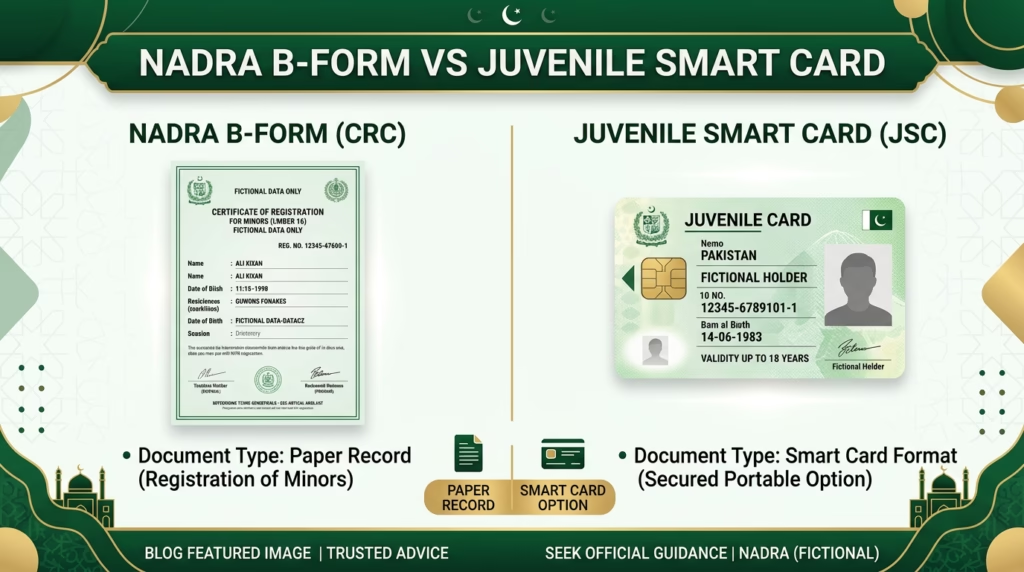
What is a NADRA Juvenile Card?
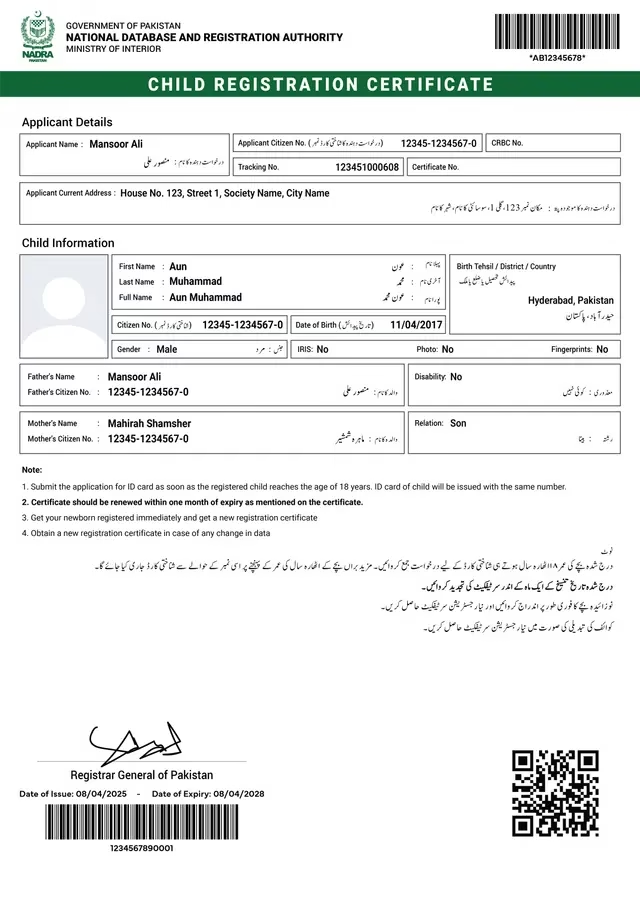
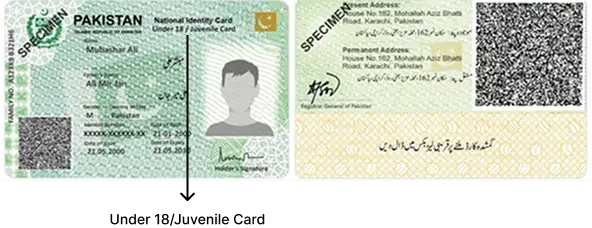
A Juvenile Card is a chip-based, smart identity card issued to Pakistani citizens under the age of 18. Unlike the paper-based Child Registration Certificate (CRC/B-Form), the Juvenile Card is a physical “Smart Card” that looks like an adult CNIC but is legally designated for minors.
Why Should You Get a Juvenile Card? (BISP & Legal Benefits)
For users of the 8171 web portal, the Juvenile Card offers several advantages:
- BISP Taleemi Wazaif: It serves as the ultimate proof of identity for children to receive educational stipends.
- Travel & Banking: It is a valid document for domestic travel and opening “Asaan” minor bank accounts.
- Security: The chip-based technology prevents identity theft and carries the child’s biometric data (fingerprints and IRIS).
- No Renewal until 18: Once made, it remains the primary ID until the child is eligible for a permanent CNIC at age 18.
Eligibility & Document Requirements
According to NADRA Rule 18(1), every Pakistani citizen under 18 is eligible.
Required Documents:
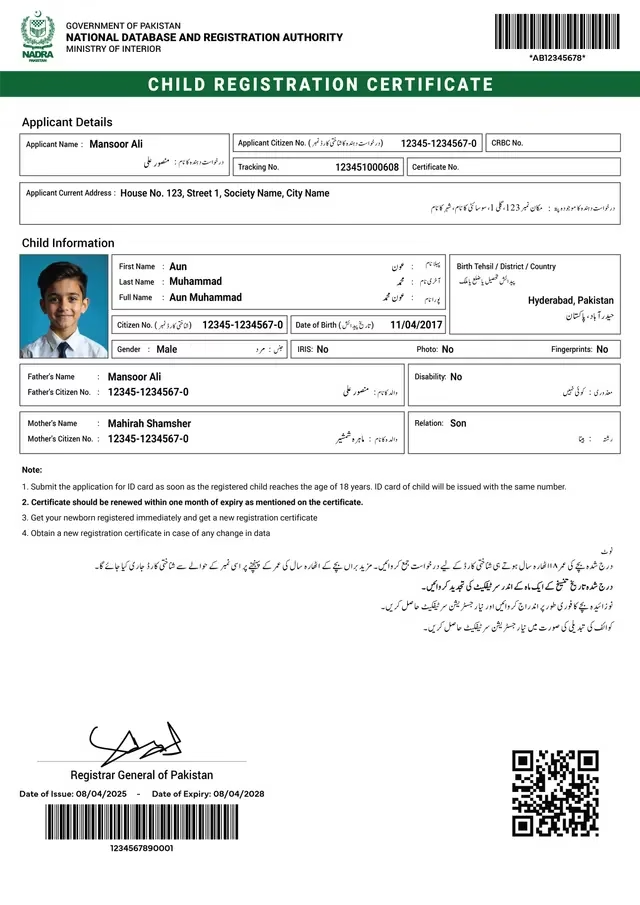
- Original B-Form (CRC): The Computerized Birth Registration Certificate issued by the Union Council.
- Parent’s CNIC: At least one parent (Mother or Father) must be present with their original, valid CNIC.
- Physical Presence: The child must be physically present at the NADRA center for photos and biometrics.
Biometric Requirements by Age
NADRA has specific rules for capturing data based on the child’s age:
- Under 10 Years: Only a photograph and IRIS (eye scan) are captured.
- 10 to 18 Years: Photograph, IRIS, and full fingerprints are mandatory.
Fee Structure 2026
Note: Fees are subject to change by NADRA. Always check the latest rates at your local NRC.
| Category | Processing Time | Estimated Fee (PKR) |
| Normal | 31 Days | Rs. 750 – 1,000 |
| Urgent | 15 Days | Rs. 1,500 – 2,000 |
| Executive | 7 Days | Rs. 2,500+ |
How to Apply: Step-by-Step Process
Method 1: At NADRA Registration Center (NRC)
- Token Generation: Visit your nearest NADRA office. Present the B-Form to get a token for the Juvenile Card.
- Photo & Biometrics: The child will be called for a digital photograph. If the child is over 10, fingerprints will be taken.
- Data Entry: The official will enter the details. Parents must verify the spelling of names.
- Verification: The accompanying parent will provide a thumbprint to attest to the form.
- Collection: You will receive a tracking slip. Use this to track your application on the NADRA website or via SMS to 8400.
Method 2: PakID Mobile App
You can now start the process via the PakID App. Upload the child’s documents and photo. However, for the first-time Juvenile Card, a visit to the NRC is often required for biometric verification.
Visit Official Nadra Website link for more details
Crucial Information for 8171 & BISP Beneficiaries
If you are checking your status on the 8171 Web Portal, ensure that your child’s Juvenile Card data is linked to your family’s poverty scorecard.
Pro-Tip: If you have already applied for a Juvenile Card, you can Withdraw BISP Cash from ATM more easily as the biometric records of the family are updated in the national database.
Frequently Asked Questions (FAQs)
Q: Can I apply for a Juvenile Card if the father is abroad?
A: Yes, the mother can process the card with her CNIC, provided she is listed as a guardian or has the original B-Form.
Q: What happens when the child turns 18?
A: The Juvenile Card expires on the child’s 18th birthday. After that, they must apply for a standard adult CNIC.
Q: Is the Juvenile Card mandatory for BISP?
A: It is not mandatory (B-Form is also accepted), but it is highly recommended for smoother biometric verification at ATMs and 8171 centers.
Internal Links
- To Home: To check your family’s current eligibility, visit our 8171 Check Online Home Page.
- To ATM Guide: Learn the secure way to Withdraw BISP Payments from ATM using your biometric ID.