Social Media Tax in Pakistan: Fact Check, FBR Draft, and What Creators Need to Know – Read Check Now
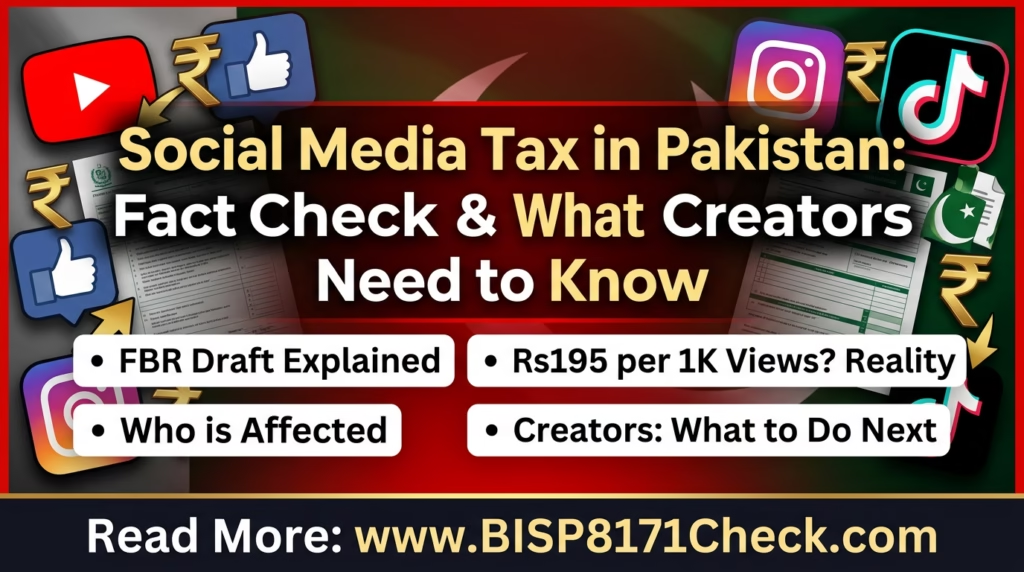
Social Media Tax in Pakistan: Fact Check & What Creators Need to Know Social Media Tax in Pakistan Fact Check & What Creators Need to Know Read Full Analysis • Updated April 2026 OFFICIAL FACT CHECK A viral wave of posts, videos, and thumbnails has created confusion around so-called “social media tax” in Pakistan. The short answer is this: the Federal Board of Revenue has proposed a draft special tax procedure for income earned from remunerative social media content, but the online claim that “every 1,000 views equals Rs195 tax” is a misleading simplification. What is social media tax? “Social media tax” is not a new tax on using Facebook, YouTube, Instagram, TikTok, or other platforms for ordinary users. The current controversy is about a draft FBR procedure aimed at taxing income generated from monetized social media content, especially where content creators earn through ads, sponsorships, or other paid digital activity. In the official draft, the FBR describes a special procedure for “persons earning income from remunerative social media content” and says objections or suggestions may be submitted within seven days of publication. That means the notification is a proposal stage draft, not the final law. Why the news went viral The biggest reason for the panic is the way the proposal was reported and amplified. Headlines focused on the formula linked to “Rs195 per 1,000 views,” while many creators and viewers interpreted that as a direct flat tax on every view. The referenced video also argues that the viral claim is incomplete, because the draft is about estimating taxable income, not literally charging each creator Rs195 on every 1,000 views as a separate tax bill. That distinction matters because taxes are usually applied to income, not raw views. What the FBR draft actually says SRO 546(I)/2026 – Key Provisions According to the FBR draft SRO 546(I)/2026, the new chapter applies a special procedure for taxation of persons earning income from remunerative social media content. The draft says the minimum income from such content shall be calculated using a formula based on total remuneration received and total expenses, with expenses capped at 30% of total revenue. The draft further says the total remuneration received will be the higher of: revenue per mille multiplied by average views and total annual posts, or the actual remuneration received in cash or kind. It defines revenue per mille as PKR 195 per 1,000 views on YouTube for the purpose of this special procedure, subject to revision. Who may be affected The draft on the official FBR site focuses on resident persons earning income from interaction with users in Pakistan through social media platforms. Separate reporting also says the proposal seeks to bring non-resident creators into the tax net where they derive Pakistan-source income from Pakistani users and have over 50,000 followers or subscribers in Pakistan. In practical terms, this means the rules are aimed at monetized creators, influencers, and digital publishers, not casual users who simply post or browse. Is it a flat tax on views? NO, not in the simple viral sense. The FBR draft uses a notional income-assessment method to estimate what a creator may have earned from content performance, and then that assessed income would be subjected to applicable tax rules. That is very different from saying every creator must hand over Rs195 for every 1,000 views as tax. The draft’s mechanism is about presumptive income calculation, which can still result in varying tax outcomes depending on actual earnings, expenses, residency status, and how the return is filed. What creators should watch carefully Creators should pay attention to three things: whether the draft is finalized, whether their income is actually monetized, and whether their audience or earnings fall within the Pakistan-source scope. They should also track how the final rules define residency, platform monetization, and declaration requirements in the income tax return. If the draft becomes law in substantially the same form, creators who earn through ads, brand deals, affiliate revenue, or paid promotions may need to keep better records of income and expenses. Why misinformation spreads so fast The social media tax debate is a textbook example of how fast partial information can turn into viral certainty. A single formula, stripped of legal context, becomes a shocking headline that spreads faster than the official notification itself. This is especially dangerous in Pakistan’s creator economy, where many people rely on short-form content, ad revenue, and sponsorships without legal or tax advisers. Repeatedly, responsible reporting matters more than engagement bait because creators need clarity, not panic. Official and reputable references The most reliable source is the FBR draft notification itself, which is the primary document behind the controversy. Reputable news coverage from Geo, Arab News, The Express Tribune, and Aaj News confirms that the story is about a proposed taxation framework for social media earnings, not a sudden blanket tax on all users. For readers who want the legal basis, the draft notification is the key reference. For readers who want practical interpretation, the published reporting and explainer video help clarify how the formula is being discussed publicly. FBR Official Draft SRO 546(I)/2026 – FBR Notification Geo News FBR proposes tax on social media earnings Arab News Pakistan proposes framework to tax social media earnings Express Tribune Non-resident YouTubers to face tax Final verdict The phrase “social media tax in Pakistan” is real in the sense that the FBR has proposed a draft to tax monetized social media income, but the viral claim that all creators are simply being charged Rs195 per 1,000 views is an oversimplification. At this stage, the safest wording is: Pakistan’s tax authority has proposed a special tax procedure for remunerative social media content, and the public debate is still about the draft, not a final nationwide penalty on every social media user. Want the latest updates on government schemes, tax rules, and digital economy news? Visit www.BISP8171Check.com Social Media Tax Pakistan – Comprehensive FAQs Frequently Asked Questions Clear, fact-checked answers about Pakistan’s 2026 proposed tax on